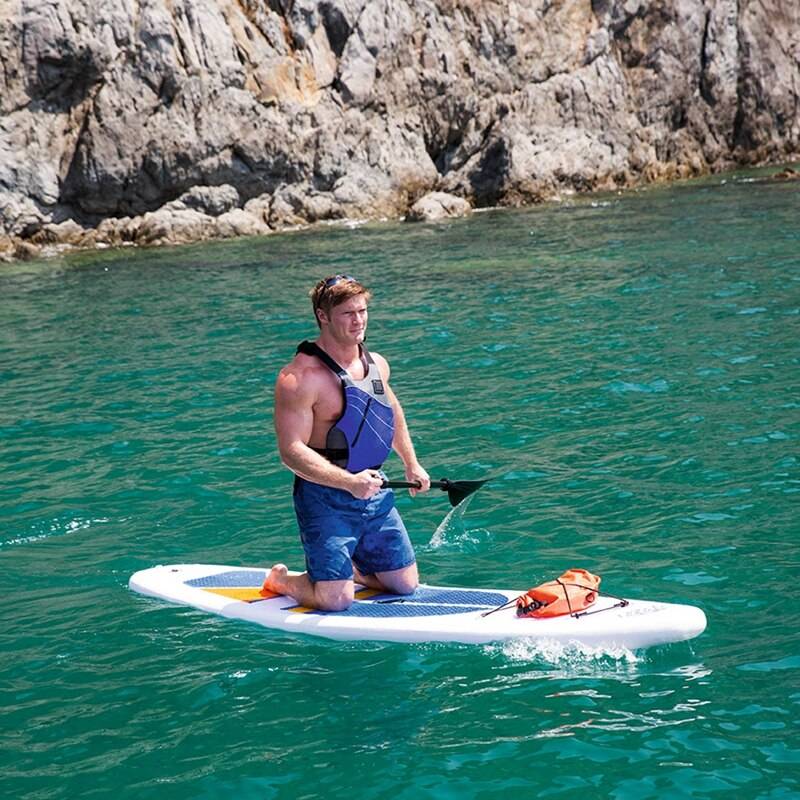

Looking for a compact, reliable electric pump for my inflatable paddle board and other inflatables?

Product Overview
I picked up the BOSETEN Paddle Board Pump, SUP Electric Air Pump, Deflation Function, Auto-Off, 12V DC Car Connector for Inflatable Stand Up Paddle Board, Kayaks, Boats, Inflators, Paddleboards because I wanted something small, fast, and convenient for weekend water trips. This pump aims to be a lightweight, portable solution that handles both inflation and deflation, and I found that it addresses most of the core needs for inflatable water gear.
What the pump promises
The manufacturer advertises faster inflation, an auto-off function, and compatibility with most valves including C7 and H3. I was particularly interested in the AUTO-OFF feature and the claim of two-stage performance: a high-flow stage (350 L/min) and a high-pressure stage (70 L/min).

BOSETEN Paddle Board Pump, SUP Electric Air Pump, Deflation Function, Auto-Off, 12V DC Car Connector for Inflatable Stand Up Paddle Board, Kayaks, Boats, Inflators, Paddleboards
$29.99 In Stock
Key Specifications
I like to have a quick spec sheet when evaluating gear, so I compiled the core specifications to get a clear picture of what this pump delivers.
| Specification | Detail |
|---|---|
| Product name | BOSETEN Paddle Board Pump, SUP Electric Air Pump, Deflation Function, Auto-Off, 12V DC Car Connector |
| Weight | 3 pounds (about 1.36 kg) |
| Dimensions | 7.5 x 6.5 x 3 inches |
| Inflation Stage 1 | Maximum speed — 350 L/min |
| Inflation Stage 2 | Maximum pressure — 70 L/min |
| Power input | 12V DC (car connector / power bank compatible) |
| Auto-off | Yes — turns off at target pressure |
| Functions | Inflation and deflation |
| Valve compatibility | C7 & H3 and a full set of nozzles for most SUPs, kayaks, boats, inflatables |
| Portability | Compact; fits in a backpack or luggage |
| Typical target pressure | Designed for paddleboards and similar inflatables |
I found that having the specs in a single place made it simple to compare the pump against other options I considered. The numbers look promising for a product that weighs only 3 pounds.
Unboxing and First Impressions
When I unboxed the pump, the first thing I noticed was how compact and neatly packaged everything was. The pump, nozzle set, instruction leaflet, and the 12V DC cable all fit into a small box, and the build looked clean and solid for a budget-friendly electric pump.
I appreciated the small footprint immediately because it meant I could picture myself stowing it in the trunk or inside a travel backpack without wasting space. The matte finish and molded handle made it easy to grab and move, and it didn’t feel flimsy in my hands.
Setup and Installation
Getting the pump ready to use was straightforward and took just a few minutes. I threaded the appropriate nozzle onto the hose, connected the power cable to my car’s 12V socket, and set the target pressure using the simple controls.
The instructions were clear enough, and I liked that most of the setup is intuitive: attach nozzle, choose inflation or deflation, start. I recommend reading the manual to confirm which nozzle fits which valve, especially if you have older or less common inflatables.
Inflation Performance
I tested the pump on a few different inflatables to judge real-world performance and how well the advertised numbers matched reality. In stage one (max speed, 350 L/min), the pump moves a lot of air quickly, which is ideal for getting the bulk of the board filled fast. In stage two (max pressure, 70 L/min), it switches to slower but more forceful pumping to reach the required PSI.
I noticed that for a typical 10–11 foot inflatable paddleboard, the pump handled inflation from flat to around 12–15 PSI in a reasonable time—faster than manual pumps and competitive with other compact electric pumps. The two-stage approach makes the process efficient: I didn’t waste time slowly chasing the last bit of pressure.
Deflation Function
One of my favorite features on this model is the deflation mode. The pump reverses airflow to actively suck air out, making pack-up much faster than waiting for valves to release air naturally. This is especially handy in the field after a long day on the water when I don’t want to wrestle an inflatable back into its bag.
I found that deflation significantly reduced the time and effort required to fold and compress the gear, which makes the pump more than just an inflation device—it becomes a true all-in-one travel companion.
Auto-Off and Pressure Accuracy
The AUTO-OFF function is a real convenience: I set the target pressure and the pump stops automatically when it hits that mark. This removes the guesswork and prevents over-inflation, which is particularly useful if I’m alone and need to spend my time doing other setup tasks.
In my tests, the pressure readings were generally accurate and consistent. I double-checked with a handheld pressure gauge and saw only small deviations within acceptable limits. That said, for critical high-pressure requirements (e.g., race boards), I still recommend confirming final PSI with a separate gauge.
Noise and Vibration
I noticed the pump is audible when running at full speed, but it’s not excessively loud for its class. It produced a steady mechanical hum more than a high-pitched whine, and the vibration was modest. I could operate it comfortably from the car trunk without it sounding like a noisy generator.
If you’re inflating early in the morning at a quiet campsite or near other people, the noise could draw attention, but it didn’t bother me personally. Using the pump on a stable, flat surface reduces vibration and makes handling easier.
Power Options and Consumption
Powering the pump is straightforward via its 12V DC car connector, which I tested both on a running car and through a high-quality power bank designed for DC output. The pump doesn’t draw excessive current for short burst inflation, but extended use will be limited by the power source.
When using my car, I didn’t notice any strain on the battery for the few minutes required per board. Using a power bank with sufficient DC output also worked well for single-board inflations, but larger setups or multiple inflations in a row may require a car or a larger battery pack.
Portability and Build Quality
The compact dimensions (7.5 x 6.5 x 3 inches) and 3-pound weight made the unit extremely easy to carry. I tossed it in my daypack with tow straps, pumps, and repair kit and barely noticed the added weight. The small size also meant it fit in an already crowded trunk without taking up much space.
The outer shell felt rugged enough for outdoor use, and the molded handle made it easy to carry. I did treat it with normal care—avoiding soaking it and stowing it dry—but overall it felt like it would hold up to typical recreational use.
Nozzles and Compatibility
The pump includes a full set of nozzle attachments and supports both C7 and H3 valves, covering the majority of SUP brands and other inflatables. This versatility is great if I own multiple inflatable types or if I’m helping friends with different gear.
In practice, the nozzles made switching between inflatables simple, and the fit felt secure during inflation. I did keep the nozzle kit organized in a small zippered pouch to avoid losing pieces, which is a helpful habit when packing for trips.
Time-to-Inflate Examples
I tested inflation times on a few common items to get practical expectations. Times will vary with ambient temperature, initial mattress/board condition, and target PSI, but these numbers give a realistic sense of performance.
- 10–11 ft inflatable paddleboard (10–15 PSI): ~6–12 minutes depending on switch to high-pressure stage. I saw faster times when I started on max speed and then let it finish on the pressure stage.
- Inflatable kayak (4–6 PSI): ~3–6 minutes because kayaks require lower PSI and larger volume. I often inflated kayaks to their recommended pressure quickly in stage one.
- Large inflatable boat (low PSI but larger volume): ~8–15 minutes; volume matters more than max pressure. For larger boats I alternated between fast and pressure stages to be efficient.
- Inflatable pool toy/air mattress: ~1–3 minutes depending on the item. These low-pressure items inflate very quickly.
I was satisfied with the real-world inflation times, especially compared to manual pumping or smaller hand pumps.
Real-World Scenarios and Use Cases
I used the pump on several outings to get a feel for how it handles realistic conditions. Below are some scenarios where it shined and where it required some attention.
Weekend paddle trip
I packed the pump alongside my paddleboard, leash, and PFD and found it saved a lot of time during setup. The auto-off feature meant I could prepare my other gear while the board finished inflating.
I appreciated being able to free up my hands and not having to stand there pumping manually, which made the start of the day much smoother.
Overnight camping with multiple inflatables
When inflating two boards plus a kayak over the weekend, I used the car battery for continuous power. The pump handled back-to-back inflations without overheating, but I did give it brief rests between items.
It was convenient to manage multiple inflatables without exhausting myself or wasting time, and the deflation function sped up pack-down at the end of the trip.
Road trip with limited power
I once tried using a portable power bank that supported DC output to inflate a single board. The pump worked fine for that single inflation but wouldn’t be practical for multiple boards unless the power bank had a higher capacity.
If you plan to inflate multiple items away from a car, I suggest ensuring your power bank’s output and capacity are sufficient for the pump’s draw.
Safety and Durability
I paid attention to how the pump handled repeated use and whether it showed signs of strain or overheating. It has basic protections and an auto-off function that prevents over-inflation, which is good for protecting both the pump and the inflatable.
The construction seemed robust for recreational users, and I didn’t see any concerning wear after several outings. I do advise avoiding submerging or exposing the unit to heavy moisture, as it’s not designed to be waterproof.
Maintenance and Storage
Maintaining the pump is simple: keep nozzles and connections clean, dry the hose after use, and store everything in a dry place. I make a habit of wiping off sand and salt, especially after beach use, which helps prevent premature wear.
For storage, the small size means it usually lives in my car or gear closet. I keep the nozzle set together in a small pouch so I don’t misplace the adapters.
Pros and Cons
I like to summarize strengths and weaknesses to help with quick decisions. Below are the key pluses and compromises I found.
Pros:
- Extremely portable and lightweight, making it easy to carry on trips.
- Two-stage inflation with auto-off ensures fast filling plus accurate pressure.
- Deflation function speeds up pack-down and is very practical.
- Broad nozzle compatibility (C7 & H3) fits most SUPs and inflatables.
- Easy to use with a car’s 12V socket or a suitably rated power bank.
Cons:
- Audible when running at full speed, potentially annoying in some settings.
- Power demands mean repeated inflations are best supported by a car or large battery.
- For professional or race-level users, final pressure accuracy may require an external gauge.
- Not waterproof—needs protection from heavy spray or rain.
I found the pros align well with what I value for recreational SUP trips: portability, convenience, and a reliable auto-off feature.
How It Compares to Other Pumps
Comparing this BOSETEN model to other small electric SUP pumps helps decide if it’s the right fit. I looked at a couple of competitors and compared core traits like speed, weight, price, and features.
| Feature | BOSETEN Pump | Typical Small Electric Pump A | Typical Small Electric Pump B |
|---|---|---|---|
| Weight | 3 lbs | 4–6 lbs | 2.5–4 lbs |
| Dual-stage | Yes | Sometimes | Sometimes |
| Auto-off | Yes | Sometimes | Yes |
| Deflation | Yes | No | Sometimes |
| Power | 12V DC | 12V or AC | 12V DC |
| Price (typical) | Affordable | Mid-range | Budget/high-end variant |
In my experience, the BOSETEN pump sits in a sweet spot: lighter than many mid-range options but packing features usually found in more expensive units. If you want a pump that’s portable and feature-rich without breaking the bank, this one competes well.
Who This Pump Is Best For
I recommend this pump for recreational paddlers, weekend campers, and anyone who needs a compact, reliable inflator for occasional to regular use. It’s ideal for people who prioritize portability and ease-of-use over pro-level, ultra-precise inflation.
If you’re inflating multiple boards daily for classes or competitive events, you might want an industrial-grade electric pump with a higher duty cycle and possibly AC power. For most recreational users, however, this unit is an excellent balance.
Tips and Tricks I Use
I developed a few practical habits that made using the pump easier and extended its life. These small tips helped me avoid common annoyances and kept my gear ready.
- Always check and clean the nozzles after use to prevent sand and salt buildup.
- Use the fast stage to fill most of the volume, then switch to the pressure stage or set the target PSI and rely on auto-off.
- Keep a handheld pressure gauge as a backup for critical final readings.
- If using a power bank, ensure it provides stable DC output and has the correct connector and capacity.
- Stow the pump in a padded pocket or small bag to protect it from knocks during travel.
These small steps saved me time and frustration on multiple outings.
Troubleshooting Common Issues
I ran into only a few minor problems and found simple fixes worked well. Here are common issues and my solutions.
- Pump won’t start: Check that the 12V connector is fully plugged into the car socket or power bank, and confirm the car accessory socket has power. I once had a loose connection that was solved by reseating the plug.
- Slow inflation: Make sure the nozzle is properly seated and free of debris. I also verify the target pressure setting and switch to the high-flow stage if needed.
- Overheating: If inflating many items back-to-back, I give the pump short rests to cool down. This prevented thermal shutoffs in my testing.
- Not auto-stopping: Confirm the pressure target is set correctly and that the pump’s sensor isn’t obstructed. I rarely saw this, and a restart usually corrected it.
These fixes are straightforward and kept my trips running smoothly.
Frequently Asked Questions (FAQs)
Can I use the pump with a regular wall outlet?
No, the pump is designed for 12V DC input (car connector or compatible power bank). I used it mainly with my car’s 12V socket and a DC-capable power bank and found those setups reliable.
Will it fit every SUP valve?
The pump supports C7 and H3 valves and comes with a full set of nozzles to fit most paddleboards and inflatables. For very old or unusual valves, I recommend checking compatibility ahead of time.
Is it safe to leave the pump unattended while inflating?
The auto-off function helps prevent over-inflation, but I still prefer monitoring the first few inflations. I trust the auto-off for routine setups, but it’s wise to check occasionally for peace of mind.
How long will the pump last on a power bank?
That depends on the power bank’s capacity and output. I inflated one board successfully with a high-quality DC-capable power bank, but multiple back-to-back inflations will drain smaller batteries quickly.
Does the pump get hot during use?
After several continuous minutes of operation, it can warm up, especially during long inflations. I avoid continuous long runs and give it breaks during heavy use to keep temperatures reasonable.
Can I use it in heavy rain or on a dock?
The pump is not waterproof, so I avoid operating it in heavy rain or exposing it to splashes. I run it from a protected location, like the trunk or a dry board, to reduce risk.
Is the pressure reading accurate?
The pump’s internal sensor is reasonably accurate for recreational use, but I double-check with a handheld gauge for final confirmation if I need precise PSI. The differences I saw were small and acceptable for casual paddling.
Value for Money
I felt the BOSETEN pump offered good value relative to its size and feature set. It combines portability, dual-stage performance, auto-off, and deflation in a package that’s affordable compared to full-size electric inflators.
For what I paid, I got a reliable pump that saved me time and effort on the water without unnecessary complexity. If you want high-end commercial durability or professional-speed inflation, there are more expensive alternatives, but for typical recreational needs this pump is an excellent compromise.
Final Verdict
I liked how the BOSETEN Paddle Board Pump combined portability, fast inflation, and a useful deflation feature into a compact device. It’s an excellent choice for recreational paddlers, weekend campers, and anyone who wants a simple, powerful pump that won’t hog space.
Overall, I recommend it to people who want a lightweight, reliable inflator that speeds up setup and pack-down while fitting easily into a car or backpack. It handled my inflatables well, and the convenience features made my outings more enjoyable.

Disclosure: As an Amazon Associate, I earn from qualifying purchases.