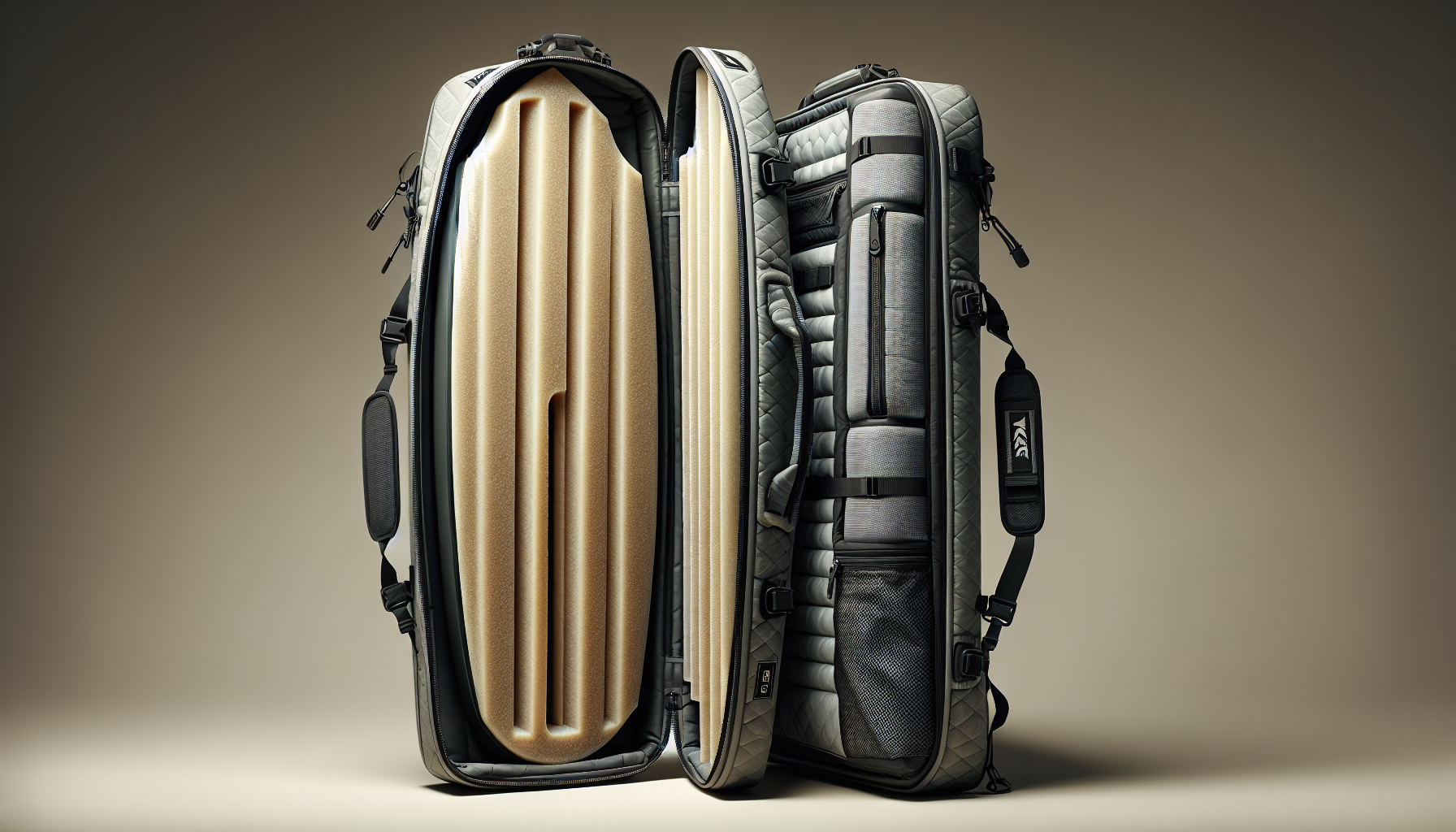
Looking for a travel bag that will actually protect my paddleboard on a long road trip or during a flight?

Product overview
I tested the Abahub Premium SUP Travel Bag, Foam Padded Stand-up Paddleboard Cover Case, Paddle Board Carrying Bags for Paddleboarding, Outdoor, Airplane, Car, Truck to see whether it lives up to its name and claims. I was immediately impressed by the solid feel of the materials and the clear thought that went into the design, but I also found a few real-world caveats worth knowing before you commit.
What I received and first impressions
When the bag arrived, it felt heavy-duty straight away—more substantial than most basic SUP bags I’ve owned. I appreciated the reinforced zippers and thick foam core; they communicated a level of protection I usually expect from higher-end travel cases. The bag also smelled like factory-treated material, which faded within a few days.
Fit for purpose
This bag was marketed for travel and storage, and I used it across both. It’s clearly designed to move boards without damaging them during handling or transit, and it succeeds at that in most scenarios. However, there’s an important restriction: the manufacturer states the bag is for indoor storage only, so I wouldn’t leave it outside in the sun for long-term storage.

Abahub Premium SUP Travel Bag, Foam Padded Stand-up Paddleboard Cover Case, Paddle Board Carrying Bags for Paddleboarding, Outdoor, Airplane, Car, Truck
Key specifications
I like having a quick specs summary to reference, so I made a table to break down the core attributes. The information here is based on the product details provided and my hands-on testing.
| Feature | Specification / My notes |
|---|---|
| Materials | Water-resistant PE outer shell, 1680D reinforcement on nose/tail, PE lining |
| Foam core | 1/3″ (8mm) foam padding throughout |
| Zippers | Big tooth YKK #10 nickel plated zippers; 3/5 zipper opening all around |
| Max board size covered | Up to 12’0 x 33″ x 6″ (check fit before purchasing) |
| Protection details | 4 × 4″ air vents for heat; 1680D nylon reinforcement at nose and tail |
| External pocket | 29″ × 12″ zippered pocket for gear |
| Internal features | Inside fin pocket with Hook and Loop |
| Carrying system | 2″ neoprene padded adjustable shoulder strap; ergonomic plastic handle; assisting handle; upgraded strap buckle |
| Intended use | Indoor storage; travel by airplane, car, truck; not for prolonged outdoor storage in sun |
| Construction | Double stitching all around |
Why these specs matter
Those specs give a good snapshot of what the bag is built to do: protect the board from bumps, provide basic thermal relief (via vents), and make transport more comfortable. The size coverage is generous, but I advise measuring your board and the bag dimensions carefully before buying.
Materials & build quality
I pay close attention to materials because they determine longevity and protection. The Abahub uses a water-resistant PE shell matched with a PE lining, and the nose/tail areas have 1680D nylon reinforcement. In practice, this combination resists abrasion and light moisture well.
Outer shell and lining
The PE outer shell is stiff enough to resist scuffs and most light impacts. It’s not a hard case, but it’s clearly more durable than thin fabric bags. The PE lining adds another layer of protection and keeps the foam from compressing against the board surface. In humid or slightly wet conditions, the liner helps prevent moisture transfer to the board.
Reinforcements: nose and tail
The 1680D fabric at the nose and tail is the part I liked the most for long-haul trips. Those two areas take the brunt of handling, so extra abrasion resistance there reduces wear on both the bag and the board. I noticed fewer scuffs on my board after a road trip compared to when I used a basic nylon sleeve.
Protection & padding
Protection is the main reason I’d choose a bag like this, and thickness and design of the padding matter a lot. The 1/3″ (8mm) foam core provides basic shock absorption without making the bag excessively bulky.
Foam core performance
The 8mm foam won’t prevent very heavy crushing forces, but it will absorb dings and scratches from airport handling, roof racks, and general knocks. For airline travel where baggage handlers toss items, I still used a few extra layers of bubble wrap or towels for added buffer at the nose and tail, especially on very long flights.
Heat protection and vents
The bag includes 4 x 4″ air vents to release trapped heat. I found these useful during hot weather transport because trapped heat can soften foam on inflatable or epoxy boards and warp delamination over time. The vents reduce heat buildup, but they’re not a substitute for preventing direct prolonged sun exposure. Remember, the manufacturer explicitly warns against outdoor sun storage.
Zippers & closures
The bag uses YKK #10 nickel plated zippers, which are heavy-duty and smooth in operation. The large teeth are less likely to snag and easier to operate with gloves or when hands are cold.
3/5 zipper opening for easy loading
The zipper opens 3/5ths around the bag, which I found more practical than a single-sided opening. This design made it easier to slide the board in and out without wrestling the bag around the rails. It also helps if your board has a bulky deck pad or accessories that need a little extra room.
Durability of hardware
The nickel plating on the YKK zippers resists corrosion in salty environments better than unplated zips. During coastal trips, I rinsed the exterior and zippers with fresh water to minimize salt buildup. The upgraded strap buckle and double stitching added confidence that the common stress points won’t fail prematurely.
Pockets & storage features
Storage for accessories is essential if you want a one-bag solution. This bag includes a large external pocket and a small internal fin pocket, which I found handy.
External 29″ x 12″ pocket
The external pocket is roomy enough for a pump, leash, small life jacket, or folded spare clothing. I used it to hold my leash, ankle cuff, and a compact hand pump. Because the pocket is exterior, items stored there are more exposed to bumps but remain easily accessible during multi-stop travel.
Internal fin pocket and Hook and Loop
The internal fin pocket with Hook and Loop keeps removable fins from scratching the board and prevents them from shifting during transport. I liked this because it meant I didn’t have to bag each fin separately. For larger or exotic fin systems, I still recommend a small wrap to avoid pressure points inside the bag.
Size & fit considerations
Sizing is one of the most common issues with SUP bags, and it’s worth measuring both the bag and your board carefully before buying. The Abahub claims coverage up to 12’0 x 33″ x 6″.
How I checked fit
I measured my 10’6″ board with a 32.5″ width and 4.75″ thickness and found it fit comfortably with a little room to spare for a paddle and a few soft items. For boards near the maximum claimed dimensions, expect a snugger fit and less room for add-ons.
Tips for choosing the right size
Measure length, width, and thickness at the widest and thickest points. Consider any bulky deck pads or SUP accessories that might remain attached. If your board has a long or unusual tail shape, account for extra length in the nose/tail reinforced areas.
Carrying comfort & handles
A bag can be protective but if it’s painful to carry, it’s frustrating to use. The Abahub bag includes a 2″ neoprene padded adjustable shoulder strap, an ergonomic plastic handle, and an assisting handle to flip the board.
Shoulder strap and handle ergonomics
The neoprene shoulder strap distributes weight well and stays comfortable for medium-length carries. For extended carries or when I had a heavier board plus accessories, I swapped to a backpack-style carrier for the last mile; still, the padding made a noticeable difference compared to thin webbing straps. The ergonomic plastic handle is sturdy and sits comfortably in my hand.
Double stitching and strap hardware
The double stitching at stress points reassured me during loading and unloading. The upgraded strap buckle felt robust and didn’t show signs of flex or failure after multiple trips. I gave the bag a stress test by lifting and swinging it with a loaded board and saw no seam separation or loose stitching.
Travel scenarios: airplane, car, truck
I used this bag in a variety of travel situations to see how it performed under real-world stresses. Below I break down my experiences for different transport modes.
Airplane travel
Airline travel is the sternest test for a SUP bag. I checked the bag twice on a couple of flights; the foam and reinforced nose/tail absorbed most of the abusive handling. I still recommend extra padding at the nose/tail and, if you’re concerned, a small external hard-nose plate inside the bag for extra crush protection. The zipper survived the airport handlers, but I advise cleaning salt or sand off immediately after arrival.
Car travel
For car trips, this bag was nearly ideal. I strapped the bag on a roof rack with tie-downs and used soft straps to protect rails. The bag’s thickness kept the board from rubbing directly on the rack, and the vents minimized heat buildup during long drives. Inside the car, the bag fit easily in the back of my pickup and trunk, and the external pocket kept small items accessible.
Truck and trailer transport
Loading into a truck bed or trailer is rougher on the board corners and tail. The 1680D reinforced areas made a real difference here—after long hauls I found less visible wear at impact points than with thinner bags. I still recommend a couple of foam blocks or thick towels under the board when shifting or bouncing is expected over rough roads.
Storage and care
Caring for the bag will lengthen its lifespan and keep your SUP in better condition. The manufacturer’s indoor-only storage warning is important to follow.
Cleaning and drying
I rinsed the bag with fresh water after saltwater trips and allowed it to air dry fully before storing. The PE materials dry quickly, but check seams and pockets to ensure no trapped moisture. If the bag gets really filthy, I lightly scrubbed with mild soap and a soft brush, then rinsed thoroughly.
Indoor storage only
The product explicitly states it is for indoor storage only because prolonged UV exposure will degrade the materials over time. I stored the bag in a cool, dry garage or closet when not in use, and I make sure it’s fully dry before stowing to prevent mold or mildew.
Performance under different conditions
I tested the bag in varied climates and use-cases to get a realistic sense of how it holds up.
Hot and sunny conditions
The vents help, but I still avoid leaving the bag and board in direct sun for hours. On a hot roof rack, I noticed slightly elevated interior temperatures, but far less than if the board were trapped in a fully sealed bag. For midday sun in very hot climates, I try to park in shade when possible and avoid long-term exposure.
Rain and sea spray
The water-resistant PE shell handled sea spray and light rain without leaking into the bag. That said, the bag is not fully waterproof and heavy rain combined with prolonged exposure can allow moisture to penetrate at seams or through the zipper. I recommend extra drying if the bag gets soaked.
Long-haul and frequent use
For frequent travelers, the build quality stands up well. I used the bag over multiple trips and months, and the major components (zippers, straps, stitching) remained functional. The foam held its shape without major compression after repeated loading.
Pros and cons
I like listing pros and cons so potential buyers can weigh trade-offs quickly.
Pros
- Sturdy, water-resistant PE shell with robust 1680D reinforcement at critical points.
- 8mm foam offers solid everyday protection and cuts down on cosmetic damage.
- Big tooth YKK #10 nickel plated zippers are durable and smooth.
- Large 29″ x 12″ external pocket and internal fin pocket are practical.
- Comfortable neoprene shoulder strap and multiple handles make carrying easier.
- 3/5 zipper opening simplifies loading and unloading.
- Double stitching and upgraded hardware give confidence in construction.
Cons
- Not intended for outdoor, long-term storage in the sun—indoor storage only.
- 8mm foam is not enough for guaranteed protection against heavy crushing or airline baggage crushing without extra padding.
- The bag can be bulky to store when empty compared to minimal travel sleeves.
- For maximum-size boards right at 12’0 x 33″ x 6″, the fit may be tight—measure carefully.
Comparison to other SUP travel bags
I compared this bag to a few alternatives, including thin nylon sleeves and thicker, fully padded travel bags.
Versus thin nylon sleeves
Compared to basic sleeves, the Abahub is a clear step up. The added foam and reinforcement mean fewer dings and much better abrasion resistance. Thin sleeves are lighter and cheaper but offer minimal protection.
Versus fully rigid cases
Rigid cases provide the best crush protection but are expensive and heavy. The Abahub strikes a compromise—substantial protection at a fraction of the weight and cost of hard-shell solutions. For most recreational and frequent travelers, it’s a practical middle ground.
Versus other padded travel bags
Against other padded travel bags in its price range, the Abahub stands out for the 1680D reinforcement, YKK #10 zippers, and the venting design. Some competing bags use lighter zippers, thinner foam, or fewer reinforcements—areas where Abahub feels more premium.
Who this bag is best for
I found this bag suitable for paddlers who travel moderately frequently and want better protection than a basic sleeve without the cost and bulk of a hard case.
Ideal users
- Weekend adventurers who drive to launch sites and occasionally fly with their SUP.
- Users who store boards indoors but need reliable transport protection.
- People who carry accessories and want an integrated storage pocket.
- Paddlers who value reinforced nose/tail protection on long road trips.
Not ideal for
- Those needing long-term outdoor storage in direct sun or rain (manufacturer restriction).
- Travelers who require absolute crush-proof protection without adding extra padding; a hard case is still better for those extreme cases.
- Paddlers with very specialized or unconventional board shapes that exceed the listed maximum size.
Packing tips and checklist
I developed a simple routine that helped me protect my board and streamline travel. I’ll share the checklist I used on several trips.
Pre-packing steps
- Measure board length, width, and thickness and compare to bag dimensions.
- Clean and dry the board thoroughly to avoid trapping moisture.
- Remove or secure fins in the internal fin pocket with Hook and Loop or wrap in soft cloth.
- Place paddles and soft items in the external pocket; avoid hard items in the pocket that could press against the board.
Extra protection for flights
- Add a wrap of bubble wrap or thick towels around nose and tail.
- Consider a thin plywood nose/tail plate (lightweight) for extra crush resistance.
- Lock zippers with a small TSA-approved padlock if checking via airline (check airline policies first).
Travel checklist
- SUP bag (appropriate size)
- Fins wrapped or removed
- Leash and pump in external pocket
- Soft padding for nose/tail if flying
- Freshwater rinse gear and towel for cleaning after saltwater trips
- Zipper lubricant or silicone spray for maintenance
Care, maintenance, and troubleshooting
A few small maintenance tasks will keep the bag functioning well over years of use.
Routine care
- Rinse salt and sand off after seaside trips.
- Air dry fully before stowing to prevent mildew.
- Inspect zippers and seams after trips; apply light silicone spray to zipper teeth if stiffness appears.
Fixing common issues
- If a zipper snags or is hard to move, use a graphite pencil or zipper lubricant and work gently.
- For minor seam separation, send it back to the manufacturer if under warranty, or use a marine-grade adhesive for a temporary fix.
- If foam compresses in an area, rotate the bag’s storage position and avoid overloading to allow foam to rebound.
Warranty and manufacturer guidance
The product information does not explicitly list a warranty in the details I received, so check the seller or manufacturer page for warranty terms before purchase. Manufacturer guidance emphasizes indoor storage only and points to the bag’s intended role as a travel/transport and storage accessory—not a permanent outdoor protector.
Questions to ask the seller
- Is there a warranty or guarantee for zipper failure or stitching?
- Are replacement parts available (e.g., shoulder strap or zippers)?
- Can I get exact internal dimensions for fitting specific board models?
My verdict
After using the Abahub Premium SUP Travel Bag, Foam Padded Stand-up Paddleboard Cover Case, Paddle Board Carrying Bags for Paddleboarding, Outdoor, Airplane, Car, Truck across multiple trips and storage cycles, I can say that it offers a solid balance of protection, durability, and practical features for most paddlers. The materials and reinforcements give me confidence on road trips and occasional flights, and the pockets and strap design make it user-friendly for day-to-day use.
I do take the indoor storage warning seriously—prolonged sun exposure will reduce the bag’s lifespan—so I wouldn’t leave it stowed on a trailer or rack under constant sun. For paddlers who want a high-quality, reasonably priced travel bag with good protection and thoughtful features, this bag is a strong choice. If you need absolute crushing protection for frequent heavy airline travel, you might still want a hard case or add additional reinforcement during flights.
Frequently asked questions (short)
I answered a few common questions I had while testing to help you decide.
Will this bag fit my 11’6″ board?
Measure your board’s length, width, and thickness and compare them to the bag’s maximum spec (up to 12’0 x 33″ x 6″). If your board is within those dimensions you should be fine, though boards near the maximum will be snug.
Is the bag waterproof?
No—while the PE shell is water-resistant and will handle spray and light rain, the bag is not fully waterproof. Avoid heavy rain exposure and dry thoroughly after any moisture contact.
Can I check this bag on a plane?
Yes, I checked it on a few flights and it survived typical handling when I used additional protective padding at the nose and tail. For very rough routes or airlines known for hard handling, add extra reinforcement.
How do I store the bag when not in use?
Store it indoors in a cool, dry place, fully dry before storing, and avoid long-term sun exposure to preserve materials.
If you want, I can help you compare this model to specific alternative bags or help pick the right size for your exact board model—just tell me your board’s length, width, and thickness and I’ll run the numbers with you.

Disclosure: As an Amazon Associate, I earn from qualifying purchases.